
Blogue
Une poubelle de déchets médicaux peut facilement passer inaperçue jusqu'à ce qu'il y ait une sorte de fuite ou de déversement. Une poubelle pour déchets médicaux entrera en contact avec le couvercle, la pédale, le bord, le rebord du revêtement et le sol environnant lors de l'élimination d'articles tels que de la gaze, des pansements, des EPI et autres contaminés dans des cliniques, des services, des cabinets dentaires, des laboratoires et des salles de traitement. Une décontamination inappropriée d’une poubelle de déchets médicaux réutilisables laisse derrière elle de la terre séchée qui protège les microbes à l’intérieur et rend la poubelle plus difficile à manipuler en toute sécurité.
La décontamination d’une poubelle réutilisable pour déchets médicaux n’implique pas de stérilisation. Il vise plutôt à nettoyer toute contamination visible, à désinfecter les surfaces dures nettoyées, à protéger les membres du personnel lors de la manipulation des bacs et à garantir que les bacs sont prêts à être réutilisés conformément aux politiques de contrôle des infections et de gestion des déchets de l'établissement.
Un calendrier écrit pour l'installation doit être déterminé en fonction de la nature des déchets, de la circulation dans la zone et de la politique locale. Le bac doit être traité immédiatement dès la découverte d'une fuite, d'une exposition au sang/liquide corporel, d'une odeur, d'un dysfonctionnement du revêtement ou de tout contact avec des déchets médicaux se produisant à l'extérieur du revêtement. Le nettoyage peut être effectué quotidiennement, hebdomadairement ou après chaque période de collecte des déchets, selon la zone concernée.
Déplacez la poubelle médicale contaminée uniquement si nécessaire avant de la manipuler et gardez la zone de travail sous contrôle. Les employés seront guidés par le plan de contrôle de l'exposition de l'établissement sur la manière d'utiliser correctement les équipements de protection et d'éviter de comprimer, de secouer ou de manipuler à l'aveugle les déchets médicaux. La décontamination de la poubelle à déchets médicaux n'aura jamais lieu tant que les déchets médicaux n'auront pas été correctement retirés de leur revêtement.
Scellez ou fermez la doublure en utilisant la méthode requise par votre programme de gestion des déchets. Après le retrait, inspectez le bac sans placer votre visage directement au-dessus de l'ouverture. Recherchez des fuites, des flaques de liquide, du ruban adhésif collé, des résidus sous la jante, des fissures, des charnières desserrées, des pédales usées, des couvercles endommagés ou des surfaces rugueuses qui pourraient emprisonner la contamination.
Si des débris restent dans le conteneur, utilisez des outils approuvés par l'établissement plutôt que vos mains. Une poubelle médicale ne doit pas devenir une station de tri. Si des objets tranchants, du verre brisé ou des objets dangereux inattendus sont présents, arrêtez-vous et suivez la procédure d'incident de l'installation.
Utilisez de l'eau tiède et un détergent ou un nettoyant médical approuvé pour laver toutes les surfaces accessibles. Faites attention au dessous du couvercle, à la charnière du couvercle, à la plaque de pédale, à la rainure de la jante, aux poignées, aux supports de roues et à l'extérieur inférieur. Le récurage est souvent nécessaire car les résidus séchés et les sols ressemblant à des biofilms peuvent réduire les performances du désinfectant.
Certains nettoyants nécessitent d’abord un rinçage avant d’utiliser le désinfectant. D'autres sont des détergents désinfectants conçus pour une opération en une seule étape, en particulier sur les surfaces qui semblent peu sales. Suivez simplement l'étiquette du produit et la politique de l'établissement. Si le bac était clairement contaminé, effectuez le nettoyage et la désinfection en deux étapes distinctes et non en une seule fois.
Appliquez le désinfectant sur toutes les surfaces dures nettoyées, en utilisant la méthode indiquée sur l'étiquette, comme des lingettes, une application avec un chiffon ou un spray contrôlé si cela est autorisé. Essayez de ne pas « vaporiser » ou aérosoliser quoi que ce soit. Ne mélangez pas de produits chimiques et ne combinez pas d'eau de Javel avec de l'ammoniaque ou des nettoyants acides.
Le temps de contact correspond à la durée pendant laquelle le désinfectant doit rester humide sur la surface. Ainsi, si l’étiquette indique une minute, trois minutes, cinq minutes ou dix minutes, le bac doit rester humide tout le temps. S'il commence à sécher trop rapidement, réappliquez le produit. C’est là que de nombreuses routines minutieuses échouent.
Après ce temps de contact requis, laissez le bac sécher à l’air libre ou essuyez-le comme indiqué sur l’étiquette du désinfectant. Inspectez à nouveau avant d’installer une nouvelle doublure. Le bac doit être visiblement propre, suffisamment sec pour une manipulation en toute sécurité, ne pas contenir de fortes flaques de produits chimiques, et il doit également être structurellement intact.
| Tâche | Que vérifier | Pourquoi c'est important |
|---|---|---|
| Retirez le sac à déchets en toute sécurité | La doublure est fermée, non comprimée et manipulée par du personnel qualifié | Empêche toute exposition inutile pendant le processus de nettoyage |
| Inspecter avant de laver | Fissures, fuites, débris coincés, pédale endommagée, surfaces rugueuses | Les bacs endommagés peuvent piéger la contamination et devront peut-être être remplacés |
| Nettoyer avant de désinfecter | Sol visible retiré de l'intérieur, de l'extérieur, de la jante, du couvercle, de la pédale et des roues. | Les matières organiques peuvent réduire l’efficacité du désinfectant |
| Utiliser un désinfectant approuvé | Allégation relative aux surfaces dures en matière de soins de santé, dilution correcte, matériau compatible | Prend en charge la politique de contrôle des infections et protège les surfaces des bacs |
| Respecter le temps de contact humide | La surface reste humide pendant la durée requise par l'étiquette | Le désinfectant a besoin d’un temps d’exposition suffisant pour agir |
| Documenter les exceptions | Déversements, dommages, déchets inhabituels, pannes répétées du revêtement | Aide les gestionnaires à améliorer la formation, le choix des doublures et les calendriers de remplacement |
Le meilleur désinfectant n’est pas simplement le plus puissant disponible en rayon. Pour les conteneurs de déchets médicaux réutilisables, les acheteurs et les équipes des services environnementaux doivent prendre en compte les organismes préoccupants, la compatibilité des surfaces, les odeurs, l'exposition du personnel, le temps de contact requis, les réglementations locales et si le produit est approuvé pour les surfaces dures et non poreuses des soins de santé. Aux États-Unis, les désinfectants enregistrés par l'EPA doivent être utilisés conformément aux instructions de leur étiquette. D'autres marchés peuvent utiliser des systèmes d'enregistrement différents, de sorte que les règles locales devraient guider la sélection du produit final.
Pour les surfaces de soins de routine, de nombreux établissements préfèrent des produits avec des temps de contact réalistes, car le personnel peut garder la surface humide suffisamment longtemps. Un désinfectant avec un temps de contact approuvé plus court peut être plus facile à utiliser correctement qu'un désinfectant qui semble plus puissant mais qui sèche avant que l'horloge ne tourne.
Une poubelle médicale ne vaut pas la peine d’être conservée si elle ne peut pas être nettoyée de manière fiable. Remplacez le récipient lorsque des fissures, des rayures profondes, des couvercles cassés, des pédales instables, des roues endommagées, des composants absorbants ou une odeur persistante rendent la décontamination douteuse. Du point de vue des achats, le remplacement est souvent moins coûteux que le temps de travail répété du personnel, les échecs d'inspection ou les incidents de fuite.
Lorsque vous achetez des bacs de remplacement, recherchez des surfaces lisses et nettoyables, un couvercle stable, une ouverture mains libres le cas échéant, une capacité adaptée à la pièce, un bon ajustement du revêtement, un code couleur ou un étiquetage clair et une compatibilité des matériaux avec les désinfectants de l'installation.
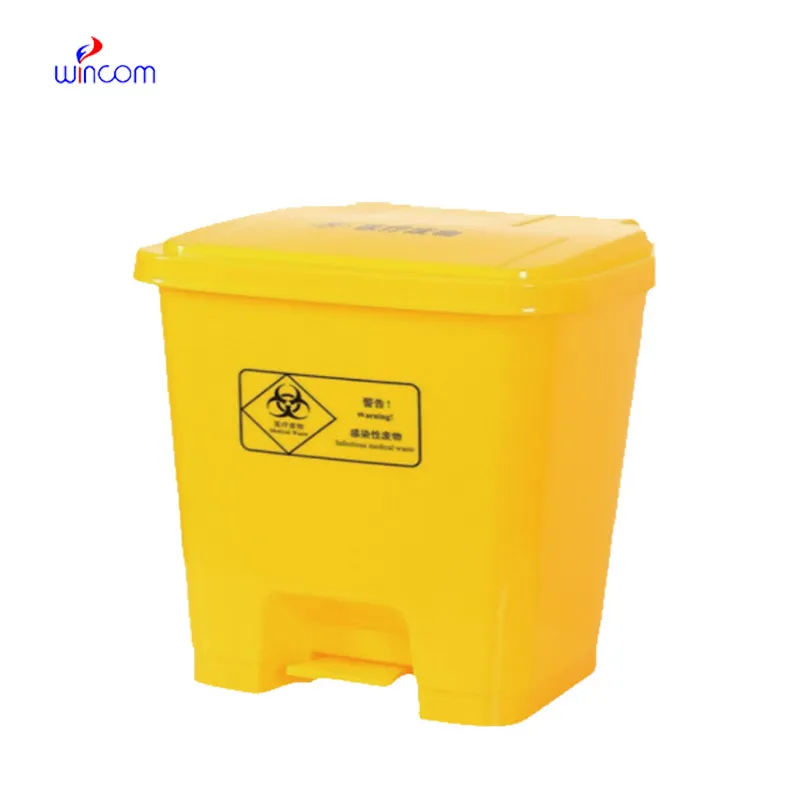
Déchets médicaux Wincom 15L WN-W15 est une poubelle compacte pour déchets médicaux destinée aux espaces de soins de santé où un conteneur plus petit est judicieux : salles d'examen, salles dentaires, salles de soins, laboratoires et postes de soins infirmiers. La taille de 15 L permet aux équipes de placer la collecte des déchets à proximité du point d'utilisation sans encombrer la pièce, ce qui est souvent exactement ce dont ont besoin les petits espaces cliniques.
Pour les équipes d’approvisionnement s’approvisionnant auprès de Wincom, ce modèle peut être consulté via la page produit officielle des déchets médicaux 15L WN-W15. Avant l'achat, confirmez la taille du sac, le type de couvercle, la pédale ou le mécanisme d'ouverture, le matériau, les options de couleur, l'étiquetage, les détails de l'emballage et la compatibilité du désinfectant avec le fournisseur afin que le bac corresponde au protocole de votre installation.
Non. Si le conteneur présente des saletés, des fuites, des résidus ou des matériaux séchés visibles, le nettoyage doit venir en premier. Le sol peut protéger les micro-organismes et empêcher le désinfectant d’entrer correctement en contact avec la surface.
Utilisez le temps de contact indiqué sur l'étiquette du désinfectant et la politique de votre établissement. La surface doit rester humide pendant le temps requis. S'il sèche trop tôt, réappliquez conformément à l'étiquette.
Pas toujours. Les solutions d'eau de Javel peuvent être utiles dans certains protocoles, mais elles peuvent poser des problèmes d'odeur, de corrosion, de dilution, de stockage et de compatibilité. Utilisez uniquement des produits approuvés à la bonne concentration et ne mélangez jamais de produits chimiques.
Généralement non. Les conteneurs à déchets sont des surfaces environnementales et non des instruments chirurgicaux. L'objectif habituel est le nettoyage et la désinfection appropriée des surfaces, à moins qu'une procédure spécifique de l'installation ne nécessite une autre méthode.
Remplacez-le lorsque des fissures, des rayures profondes, des pédales cassées, des couvercles endommagés, une odeur persistante, des fuites ou des zones difficiles à nettoyer rendent douteuse une décontamination fiable.
Wincom fournit des équipements médicaux et de laboratoire aux acheteurs mondiaux de soins de santé. Si vous comparez des poubelles médicales compactes pour des cliniques, des salles de traitement, des laboratoires ou des projets de distributeur, examinez le modèle WN-W15 et confirmez les spécifications nécessaires à votre protocole local de gestion des déchets.
Une bonne routine de décontamination est simple, mais elle doit être effectuée dans le bon ordre : éliminer les déchets en toute sécurité, nettoyer les saletés visibles, appliquer le bon désinfectant, garder la surface humide pendant toute la durée de contact de l'étiquette, inspecter le conteneur et remplacer les bacs qui ne peuvent plus être bien nettoyés. Pour les acheteurs de soins de santé, la poubelle fait partie du système de sécurité quotidien, et pas seulement un objet contenant un sac.
E-mail: [email protected]
Tél : +86-731-84176622
+86-731-84136655
Adresse : Rm.1507, place Xinsancheng. No.58, Renmin Road (E), Changsha, Hunan, Chine


 EN
EN
 af
af
 es
es
 ar
ar
 tr
tr
 sw
sw
 pt
pt
 th
th
 ur
ur
 bn
bn
 ne
ne
 vi
vi
 km
km
 lo
lo
 de
de
 ru
ru
 fi
fi
 nl
nl
 fa
fa
 fr
fr
 ko
ko


