
Blogue ue ue ue
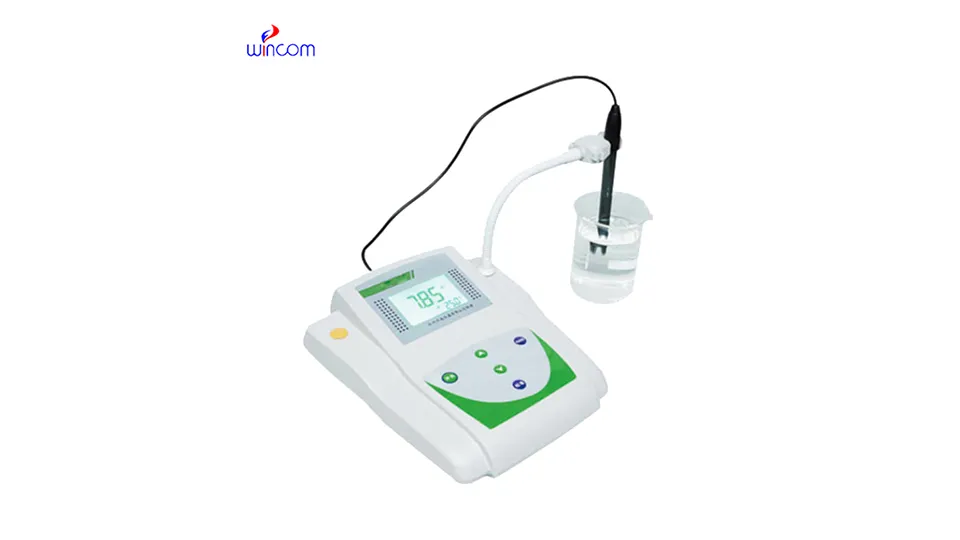
Lors de la réalisation de tests de pH en laboratoire, sauf indication contraire, la température de l'échantillon doit être maintenue à 25 ± 2 ℃. Il est important de maintenir la température de l'échantillon dans cette plage car le pH est facilement affecté par les changements de température.
Pendant l'expérience, il est crucial de s'assurer que la température de l'échantillon est maintenue à 25 ± 2 ℃. Si la température de l'échantillon s'écarte de cette plage, la précision de la mesure peut être affectée.
L’étape d’étalonnage est la base pour garantir l’exactitude des tests de pH. Le tampon d'étalonnage doit être sélectionné de telle sorte que sa plage de pH couvre l'échantillon à tester. Une fois l'étalonnage terminé, un tampon doit être utilisé pour vérifier que la différence entre la valeur de pH mesurée et la valeur étiquetée du tampon ne dépasse pas 0,05 unités. Les critères d'étalonnage incluent que la pente doit être comprise entre 90 % et 105 % et que l'écart du potentiel zéro ne doit pas dépasser ± 30 mV. Pour garantir l'exactitude, il est recommandé d'effectuer l'étalonnage au moins une fois par jour.
Pendant les tests de pH, il convient de veiller à ce que la température de l'échantillon soit maintenue à 25 ± 2 ℃. Si deux tests sont effectués, la différence entre les deux lectures ne doit pas dépasser 0,1 et la valeur moyenne est prise comme résultat final.
Lors de la réalisation de tests de pH, la température est un facteur clé. Les pH-mètres disposent généralement d'une compensation de température pour garantir l'exactitude des résultats de mesure dans différentes conditions de température. Cependant, afin d'obtenir des résultats de mesure plus précis, nous devons également effectuer une compensation d'étalonnage.
La compensation d'étalonnage implique l'utilisation d'une solution tampon standard pour ajuster la réponse du pH-mètre afin de garantir la précision de sa mesure à des températures spécifiques. Grâce à la compensation d'étalonnage, nous pouvons éliminer l'effet de la température sur la mesure du pH et obtenir des données de détection plus fiables. Le pH est étroitement lié à la température. Pendant le processus d'étalonnage, nous devons enregistrer la température à ce moment-là, car le pH-mètre effectuera automatiquement des calculs de compensation de température basés sur cette température pour garantir la précision des mesures. Ce type de compensation de température concerne principalement les électrodes. Grâce à lui, nous pouvons garantir que l'instrument peut fonctionner normalement dans diverses conditions de température, obtenant ainsi des résultats de mesure de pH précis.
Il n'y a pas de fonction de compensation de température lors de la détection de la valeur pH. La valeur du pH mesurée, qui représente la valeur réelle du pH à cette température, n'est pas automatiquement convertie en 25 ℃.
Lors de l'exécution de tests de pH, afin de garantir l'exactitude des résultats de mesure, le pH-mètre doit être calibré régulièrement. Le but de l'étalonnage est de permettre à l'instrument de maintenir des performances de mesure stables à différentes températures et environnements, fournissant ainsi des données de pH fiables.
E-mail: [email protected]
Tél : +86-731-84176622
+86-731-84136655
Adresse : Rm.1507, place Xinsancheng. No.58, Renmin Road (E), Changsha, Hunan, Chine


 EN
EN
 af
af
 es
es
 ar
ar
 tr
tr
 sw
sw
 pt
pt
 th
th
 ur
ur
 bn
bn
 ne
ne
 vi
vi
 km
km
 lo
lo
 de
de
 ru
ru
 fi
fi
 nl
nl
 fa
fa
 fr
fr
 ko
ko


