With emphasis on durability and security, the hospital bed features simple controls with variable characteristics. It may come in a dual motor or triple motor setup with independent section control. Its construction is reinforced to support heavy loads while maintaining mobility. The hospital bed usually comes with an ergonomic handrail design to provide patients with stability during transfer. Its overall design enables smooth functioning as well as easy maintenance in high-use clinical settings.

The hospital bed is used in healthcare environments to allow easy patient comfort and safety during medical procedures. It is essential in surgical recovery as well as postoperative care, where body stability is paramount. The hospital bed allows easy repositioning of patients by attendants, hence preventing complications. The hospital bed is also used within nursing homes, rehabilitation centers, and private residences. Its configuration allows it to be suitable for patients in need of extended support and continuous medical intervention.
Future hospital bed innovations will focus on automation and remote connectivity. With IoT connectivity, caregivers will be able to monitor and adjust bed settings through digital interfaces. The hospital bed can be integrated with smart sensors to monitor motion, heart rate, and sleep patterns. Data collected will enable personalized care and early intervention. Energy-efficient motors and sustainable materials will increase its usability and durability for hospital and home care settings.
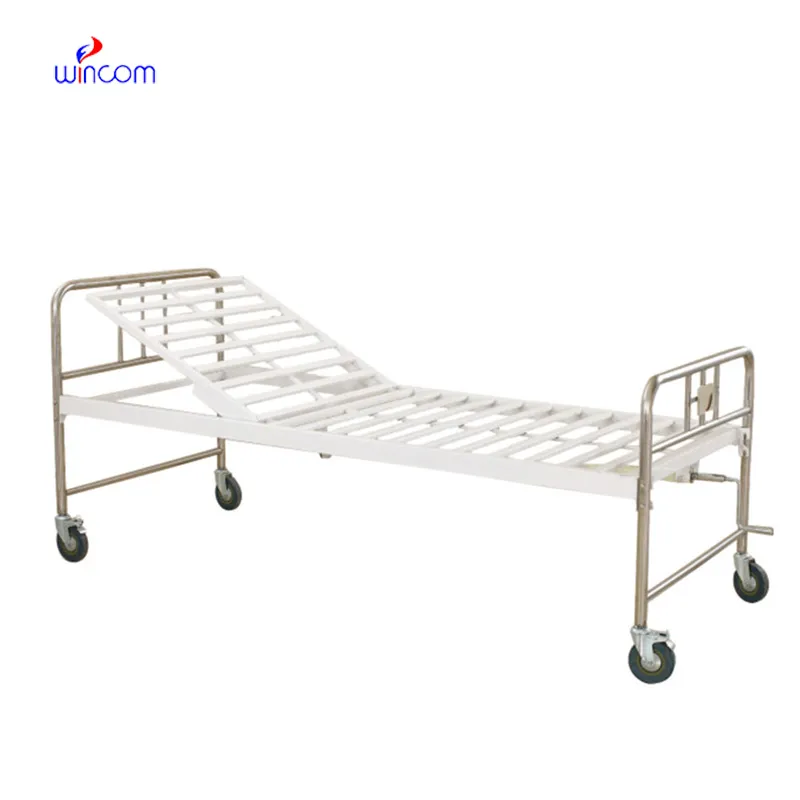
The hospital bed requires constant care to keep it in the optimum working condition. Regular cleaning controls infection hazards, especially in high-traffic environments. Electrical components need checking for performance variability, and brakes, along with rail locks, need regular checking. The hospital bed needs to be lubricated at intervals to maintain smooth operation. Environmental conditions of humidity and temperature need to be controlled so that sensitive mechanisms are not adversely affected.
The hospital bed plays a vital role in medical institutions, where patients are offered adjustable comfort with ongoing safety and accessibility. Manual or electric adjustments enable the hospital bed to support patients during examinations, feeding, or repositioning. Its durable frame accommodates extended use, and side guards and brake systems enhance stability. Meant for patient comfort, the hospital bed also ensures that medical professionals are able to give effective treatment. It is also extremely prevalent in wards, emergency rooms, and home care.
Q: What materials are commonly used in hospital beds? A: Hospital beds are usually constructed from strong steel or aluminum frames with protective coatings that resist corrosion and ensure long-term durability. Q: How does a hospital bed improve patient comfort? A: A hospital bed allows adjustment of height, head, and leg positions, helping patients find comfortable postures for rest, meals, and recovery. Q: What safety features are included in hospital beds? A: Hospital beds are equipped with side rails, locking wheels, and stable structures to ensure patient protection during care. Q: How does an electric hospital bed function? A: An electric hospital bed uses motorized controls to adjust the bed’s height and sections, providing convenience for both patients and caregivers. Q: Why is mobility important for hospital beds? A: Mobility enables easy movement of patients between rooms or wards, improving workflow and accessibility for medical staff.
The centrifuge operates quietly and efficiently. It’s compact but surprisingly powerful, making it perfect for daily lab use.
This x-ray machine is reliable and easy to operate. Our technicians appreciate how quickly it processes scans, saving valuable time during busy patient hours.
To protect the privacy of our buyers, only public service email domains like Gmail, Yahoo, and MSN will be displayed. Additionally, only a limited portion of the inquiry content will be shown.
We are planning to upgrade our imaging department and would like more information on your mri machin...
We’re currently sourcing an ultrasound scanner for hospital use. Please send product specification...
E-mail: [email protected]
Tel: +86-731-84176622
+86-731-84136655
Address: Rm.1507,Xinsancheng Plaza. No.58, Renmin Road(E),Changsha,Hunan,China


 EN
EN
 af
af
 es
es
 ar
ar
 tr
tr
 sw
sw
 pt
pt
 th
th
 ur
ur
 bn
bn
 ne
ne
 vi
vi
 km
km
 lo
lo
 de
de
 ru
ru
 fi
fi
 nl
nl
 fa
fa
 fr
fr
 ko
ko